
Our School Garden! had its launch Saturday at Santoro’s Books. The turn out was amazing and it was fun knowing most of the people who showed up, many from the Bagley School community. Carol Santoro’s husband supplied some killer carrot, raisin, oatmeal cookies. I even had a surprise visitor, Mark Reddish, who I went to elementary school with back in Massachusetts! Thanks everyone!
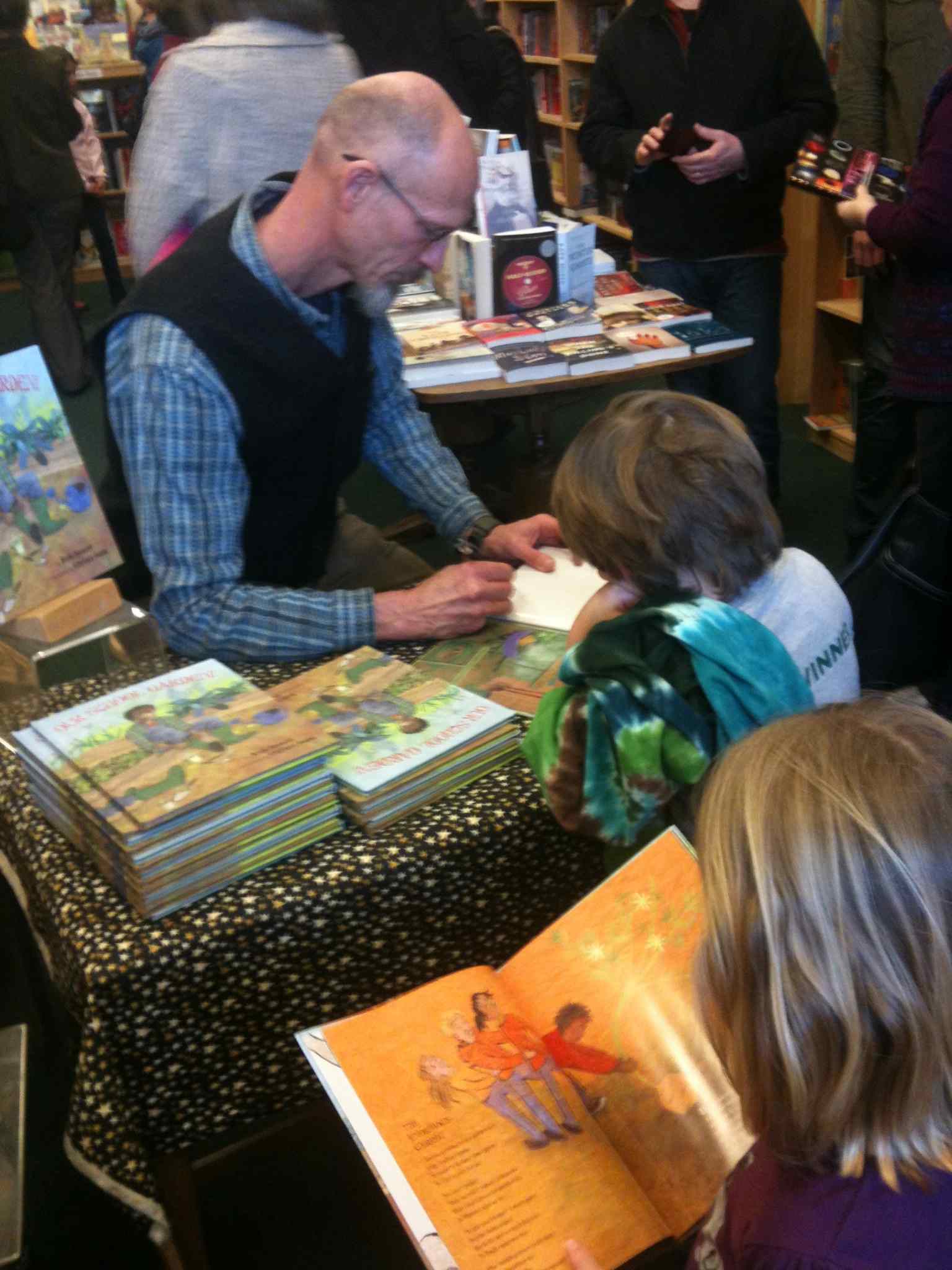
Signing Our School Garden! at Santoro's Books.
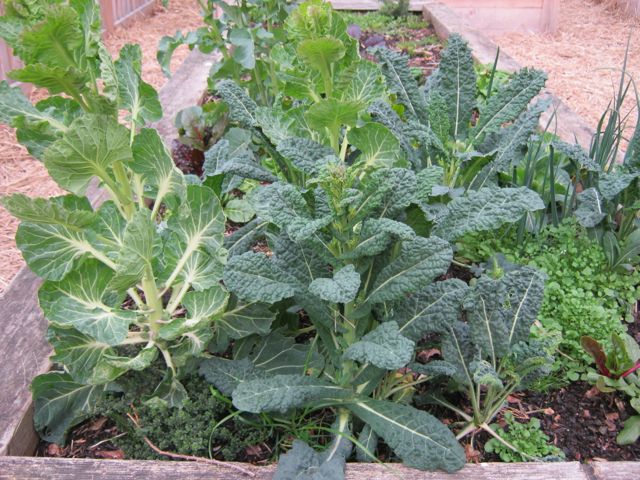
One of the best things we do at the Bagley Elementary School garden is grow food for the local food bank. We have a dedicated bed for this, the grandfather bed as we call it, since it is the one garden bed we kept when we remodeled the garden two years ago. Yesterday, with the sun out and the temperature in the upper 50’s I checked out how well the hardy greens had wintered over. We’re almost ready to do a final harvest of them so that we can replant the bed with the new seedlings that students have started under grow lights. I have to do the same thing at home with my collards before they bolt when (soon I hope!) the days get a tad warmer. While the weather hasn’t stayed warm, the days are noticeably longer.
By the way, if you live in Seattle and need plant starts, I’ll be signing books at Tilth’s March Edible Spring Plant sale at Magnuson Park Hanger #30 on March 17th beginning about 9:30 AM.
Next Saturday from 11 to 1 please join me at Santoro’s Books, 7405 Greenwood Ave. N. in Seattle as we kick off the sale of Our School Garden!
Our School Garden! is a fictional story about how young Michael, new to the city and the school, experiences the garden through the changing seasons of the school year. He discovers not just how vegetables grow but how a community can grow from a garden. The book, written in verse also features sidebars on gardening and an Author’s Note on the history of community gardens. It is beautifully illustrated by award-winning artist Christy Hale.
One of my favorite garden quotes is from the book, How to Start a School Garden: “School gardens are, in fact, libraries full of life, mystery, and surprise.” Being in a garden is like reading a good book—you’re never sure what is on the next page, but you can’t wait to get there and find out. These books are great ones to help kid’s get involved in the garden:
Oliver’s Vegetables by Vivian French, The Curious Garden by Peter Brown, and Weslandia and Seedfolks by Paul Fleischman. Also a great book that connects what we eat and the environment is Reducing Your Footprint by Ellen Rodger. There are lots of fun gardening books, too, which include Roots, Shoots, Buckets and Boots and Sunflower Houses by Sharon Lovejoy.
Other resources to get started with a school garden are:
Edible Schoolyard: A Universal Idea by Alice Waters is a book that details the history of the gardening and cooking school on the grounds of Martin Luther King Middle School in Berkeley, CA and the rationale for creating that school garden. The program’s web site (http://www.edibleschoolyard.org) has supplemental information and material.
How to Grow a School Garden: A Complete Guide for Parents and Teachers by Arden Bucklin-Sporer and Rachel Kathleen Pringle is a wonderful reference book if you are a parent or teacher interested in starting a garden at your school.
City Bountiful by Laura J. Larson gives an overview of community and school gardening in the United States from the 1890’s up to the present. Most of the reasons cited for school gardens 100 years ago are applicable today.
The School Garden Wizard (http://www.schoolgardenwizard.org/)
was created for America’s K-12 school community through a partnership between the United States Botanic Garden and Chicago Botanic Garden. It covers every step involved in making the case for, creating, using, maintaining, and evaluating a school garden.
The National Gardening Association maintains a web site rich with ideas for gardening with children: http://www.kidsgardening.org. This site also maintains a national registry of school gardens as well as sells kits, tools, and books that support a gardening curriculum.
California has emphasized school garden programs for a number of years. The California School Garden Network’s comprehensive web site can be found at: http://www.csgn.org.
Life Lab (http://www.lifelab.org) is a California-based organization that offers a number of environmental, hands-on science, and garden-based programs. The Growing Classroom – Garden and Nutrition Activity Guide is one of the best garden-based curriculum guides available. Their web site is full of useful ideas on all aspects of school gardening.
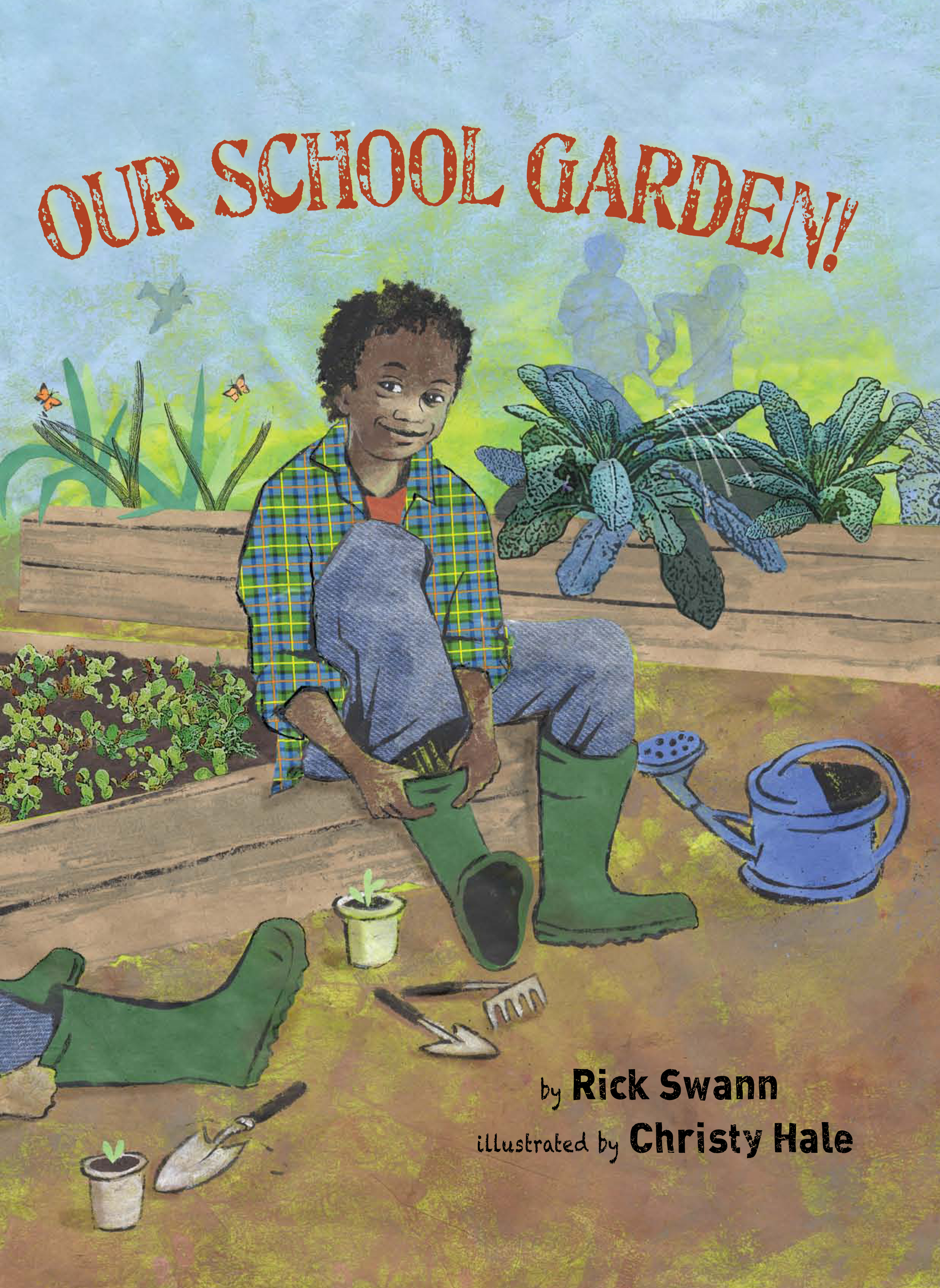
Book cover for Our School Garden!
I first started researching school gardens when I became the librarian at Bagley Elementary in Seattle. The school was in the process of reviving an old, underused garden. I found an old photo of a huge elementary school garden filled with children working in it. Frank Cooper, the head of the Seattle school system at the time, said gardening was important because, “The child studies THINGS…not through the eyes of the text books, but through his own.”1
In 1906, when my school first opened, there were about 75,000 school gardens in the United States. In 1905, the Department of Agriculture published two different bulletins encouraging school gardens nationwide, and by 1914 the U.S. Department of Education had an Office of School and Home Gardening. In 1917 the War Department got into the act by funding the School Garden Army: “A garden for every child, every child in a garden.”
Why were there so many school gardens? The main reason was that people were worried that children were losing touch with nature because more and more children were moving from the countryside to the cities. Educators at the time, including John Dewey and Maria Montessori, also believed that children learned best with real-life experiences and activities. They also believed that lessons learned in the garden were more powerful than those read out of books or off of a blackboard.
School gardens at the time were used to teach many subjects. For math, students had to calculate how many seeds were needed to plant a bed and the cost. For writing, they wrote business correspondence to the seed company to order the seeds. For science, they would measure the seeds’ germination rate. Geography would trace the origin and history of the plant. These are all real-life lessons. And the garden’s produce? It often would supply local families in need.
In reviving our school garden, we modeled our garden program like the ones a hundred years ago. We follow the guideline: “Nature is our teacher.” We want our students to be able to know about and celebrate the cycles of life. Another reason is that we believe that the garden is a classroom where many subjects can be taught in a real-life manner that involves observation, experimentation and thought.
We are also concerned, like First Lady Michelle Obama, that children are not eating enough healthy foods and staying active. So we created a place where children can experience growing and eating their own food and be physically active producing it. We also believe the garden can be a community gathering place, and that working in the garden encourages cooperation and sharing. Finally, we supply the local food bank with fresh food from our garden for those in our community in need.
It has taken a lot of planning and hard work on the part of students, staff and parents to create a school garden program. But when you see the seeds you planted yourself sprout, taste the freshly picked vegetables, or take boxes of fresh kale, peas, lettuce and beans to the food bank, you realize that the hard work is worthwhile.
If you want to start a school garden, I’ll be listing resources for you to use to get started, but keep in mind that a garden can be as small as a container that hold soil to keep near your classroom or home window. You just need at least six hours of sunlight and access to water.
My grandparents were farmers in Connecticut. They started out raising chickens and eggs, but by the time I was born were growing potatoes, tobacco (the leaves that were used for the outside wrapper of Cuban cigars), and raising Herefords for beef.
My mother donated some of the land to the Northern Connecticut Land Trust where some of the land is being used for chestnut tree research.
My cousin Nancy still runs the farm where she raises all-natural grass fed beef, heritage pork, farm-fresh eggs, and pick-your-own strawberries as well as pumpkins and an annual corn maze.
I visited Boston recently and made a point of going to the Fenway Victory Garden, 7 acres of community gardens dating back to World War II
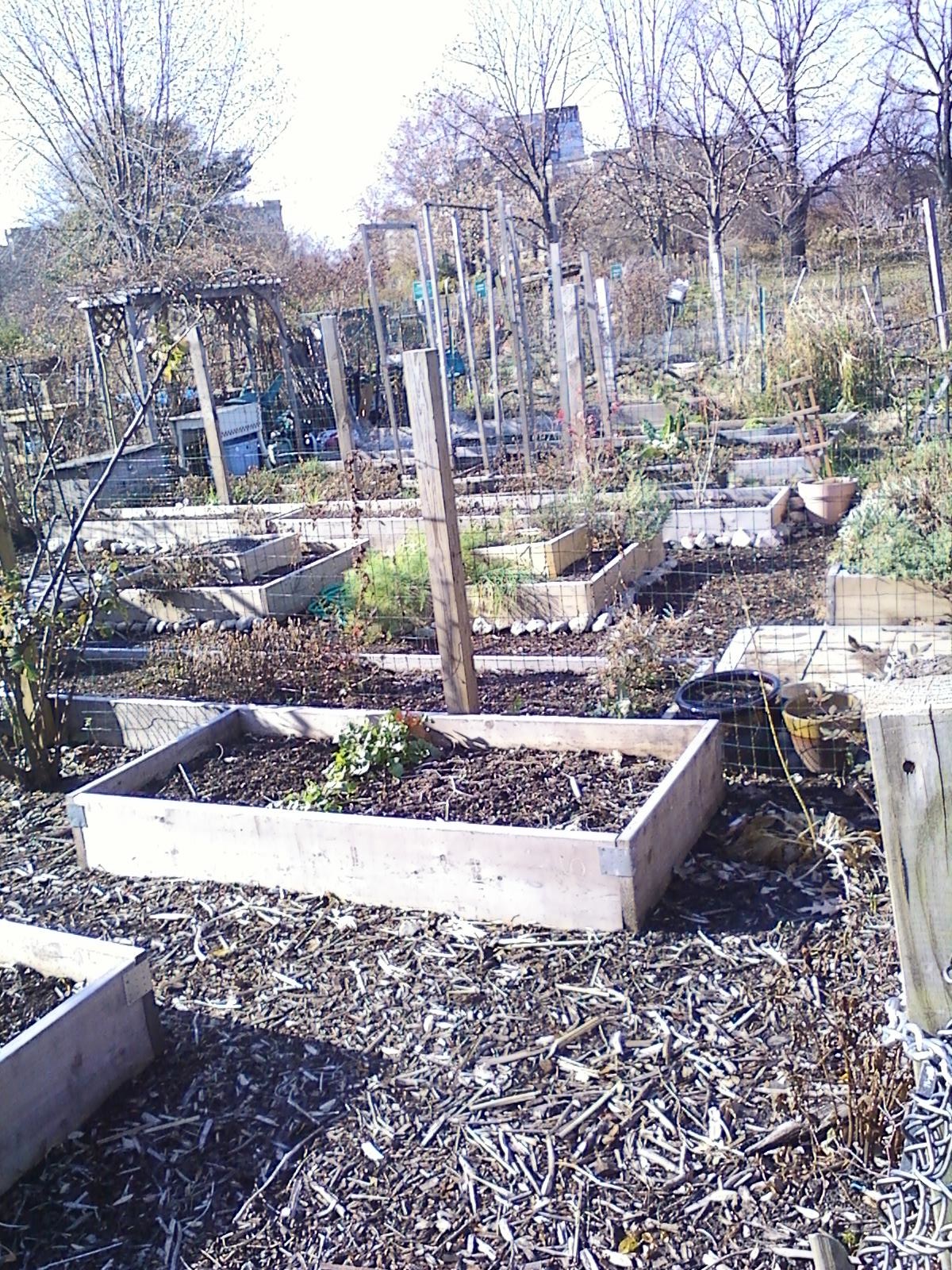
Fenway Victory Gardens
. Even though it was winter time, the day was spring-like, in the 50’s and sunny. The gardens are such a peaceful place to be, away from the bustle of the city. I can’t wait to go back during growing season!
My first book, Our School Garden!, comes out in March 2012. It is about Michael, a new student at a school with a school garden, and how it affects him over the course of the year. It includes factual information on different aspects of school gardens as well. It is published by Readers to Eaters and is beautifully illustrated by Christy Hale. I hope you’ll check it out!
 Rick Swann